
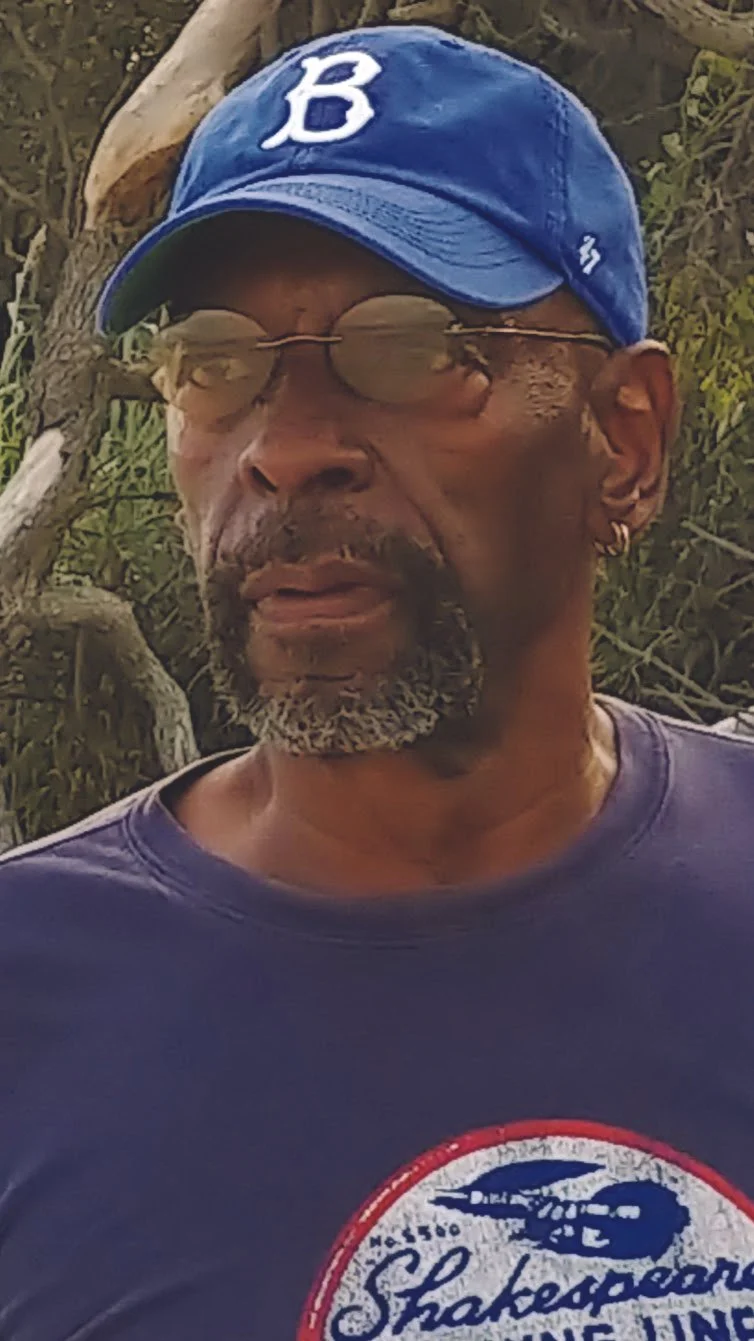
Earl Sherman Braggs,
UC Foundation and Herman H. Battle Professor of English at the University of Tennessee at Chattanooga, is the author of Hat Dancer Blue, winner of the 1992 Anhinga Poetry Prize (selected by Marvin Bell), Walking Back from Woodstock, House on Fontanka, Crossing Tecumseh Street, In Which Language Do I Keep Silent and Younger than Neil. “After Allyson,” a chapter from his yet to be published novel, Looking for Jack Kerouac, won the 1995 Jack Kerouac Literary Prize. Other awards include Tennessee Arts Commission Individual Artist Grant and a Chattanooga Allied Arts Individual Artist Grant. Supported by Summer Fellowships from the University of Tennessee at Chattanooga, he has traveled and written in Russia, Ukraine, France and Spain. Braggs is a native of Wilmington, North Carolina.

Braggs confronts us with a combination of hard realism and musical lyricism, painting unforgettable images in unforgettable language. This is American poetry at its finest: as spacious as Walt Whitman, as frank as the Beat Poets, and as alive with witness as the poetry of the Black Arts Movement. Braggs is a master storyteller, brings a wide range of characters and social circumstances to life on the page. Prophetic, American as the blues, Braggs’ poems take the outrages of recent history into a vision where the heart and humor, irony and vulnerability enable poet and community to survive and sometimes sing. There is breathtaking bravery and edge to the voice here, Joycean stream of consciousness that refuses to be censored or subdued.
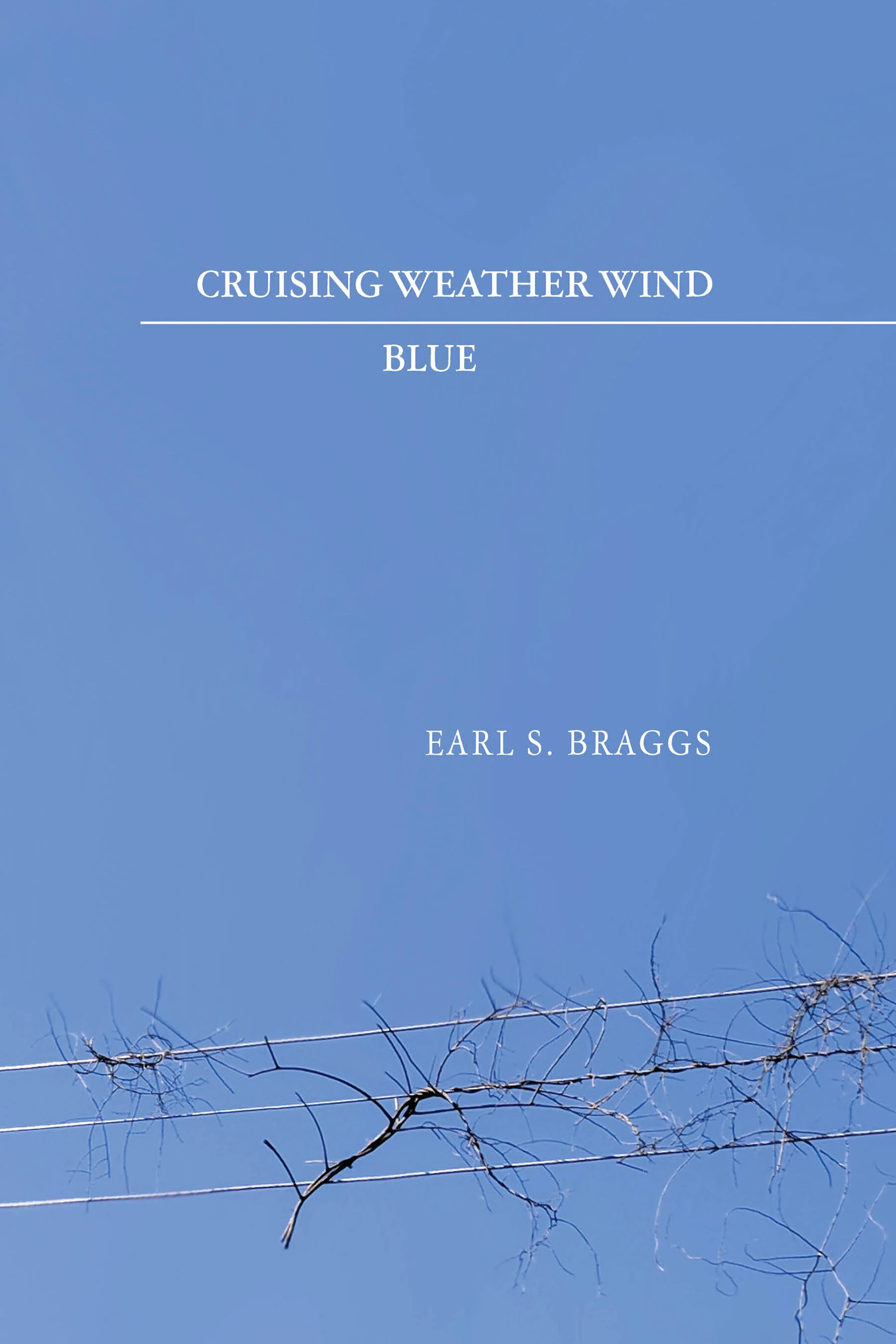
Cruising Weather Wind Blue confronts us with a combination of hard realism and musical lyricism, painting unforgettable images in unforgettable language. This is American poetry at its finest: as spacious as Walt Whitman, as frank as the Beat Poets, and as alive with witness as the poetry of the Black Arts Movement. Braggs is a master storyteller, bringing a wide range of characters and social circumstances to life on the page. From the loneliness and longing of an inmate in Folsom State Prison to the hard-won practicality of Miss Carolina Brown, we find resistance and hope on the “backside of/ ugly love.” Braggs’ voice and style are unlike that of any other poet I have encountered, with rhythms that embody the raw energy of blues greats like Bessie Smith and jazz legends like Miles Davis, capturing what it means to retain one’s dignity in a world where “Sign Here________/ is a question without a mark.” These poems will stay with you long after you read them, resonating their message of our shared humanity, documenting the pain and frustration of inhabiting the world—but also the great love and resilience we find here. — Holly Karapetkova
Excerpt from Clockwork Back, the Confederacy of Fences
If you want to know how America became America
the Beautiful, land of the free, don’t ask me,
ask Demark Vesey,
born in 1767 in Saint Thomas, hanged on July 2nd
1822
in Charleston, South Carolina for preaching
the truth.
For reasons, officially stated,… unknown. The moon
was shaped like a gun
that day in history just like yesterday in history
when they took down the Confederate Battle Flag
from the capitol grounds
of the town of James “Strom” Thurmond’s City.
The history of two weeks ago is too long of a way
to go, so somebody,
anybody walked into Demark Vesey’s AME church
and shot Demark Vesey
nine more times, point blank, in the face.
Among the dead faces, propped up
on the face of
a dark skinned modern day poster
29
Harriet Tubman and Sojourner Truth,
Nate Turner and Gabriel Prosser and David Walker’s
Appeal
to reveal what
tends, always, to be left out of history, the truth of
and about the Confederate
Battle Flag history of heritage and hate.
It is beyond too late to debate, but since we are talking
about Truth and Consequences,
let’s look closely at the economic impact of wallsand fences
and Confederate flags,
gray, stiff and dead, red, white and used-up blue glass.
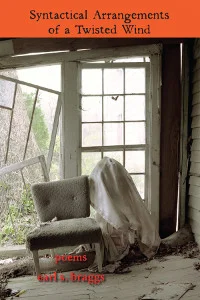
Earl Braggs' Syntactical Arrangements of a Twisted Wind is a prophetic work. American as the blues, these poems take the outrages of recent history into a vision where the heart and humor, irony and vulnerability enable poet and community to survive -- and sometimes sing. There's breathtaking bravery and edge to the voice here, a Joycean stream of consciousness that refuses to be censored or subdued. This book moves our poetry in ways that only a true poet can. -- David Mura
Story Without an Ending
White girl sitting alone in a black jazz box theater,
two complete stories above, without endings, ends
in this place, graced by the sad jazz of Star Lucky
Coffeehouse and Café on a street with no name,
in a neighborhood that has forgotten to be ashamed
of its own cracked-up sidewalks. Nothing here but
white trash reasons and broken blue beer bottles,
now empty of any promise at all. Allyson Blue
is the name I assign to this whiter than white
white girl who wears the mistake of black dye
in her platinum blonde hair. She doesn't care
to look into her own black-eye lined eyes, but
tonight she is looking through John Lennon glasses
at me. Me, I am listening to the Rolling Stones
rolling out a radio talk-show of rock 'n' roll
in a bowl of red beans and rice and jazz, so nice tonight
in this Sad Ballad Cafe afraid to face the reason
the morning sun does not want to shine brightly
upon either of us, unwanted cornfield children,
forgotten because we forgot that color matters in
South Carolina during the height of hurricane season.
A storm named Earl is on his way. We both refuse
to evacuate tables of impending high wind, rain. Love
is love and no matter how you shape it, it is still
going to be full of bullet holes. Broken hearts bleed.
No need to turn back or turn down the silk sheets
of an unmade bed. Love is the only thing that can die
and not be dead. Allyson is reading, slowly, the palm trees
of my hand. My fingers are pointing at her breasts
of reasons for pointing out the inconsistencies of tracking
the projected movement of damaged hearts and weather
patterns that call out our names, scribbled, put away
and forgotten only to be, years later, re-forgotten again,
but the story never ends. In rainy, wind driven, stormy times
like these, the movie makers never want the audience
to know black and white photography is way more beautiful
than any coded color coded colorful situational drama.
Cornfield life is real. Cornfield music is jazz. Allyson
and I, we make our unsteady way to the exit of this
song, she is breathing softly the spaces between my words,
and I'm listening to lips, painted red rush hour red.
Broken hearts bleed. Blood on coffeehouse floor, everywhere
Where are my keys? What day is today? Where does
forever come from, and where does forever go when
it disappears? I do not know is always incomplete,
the answer to standard sized questions of impending
weather patterns defined by the wet noise of wet wind
and rain that would explain, if it could, pelting from above.
Love is the only thing that can die and not be dead.
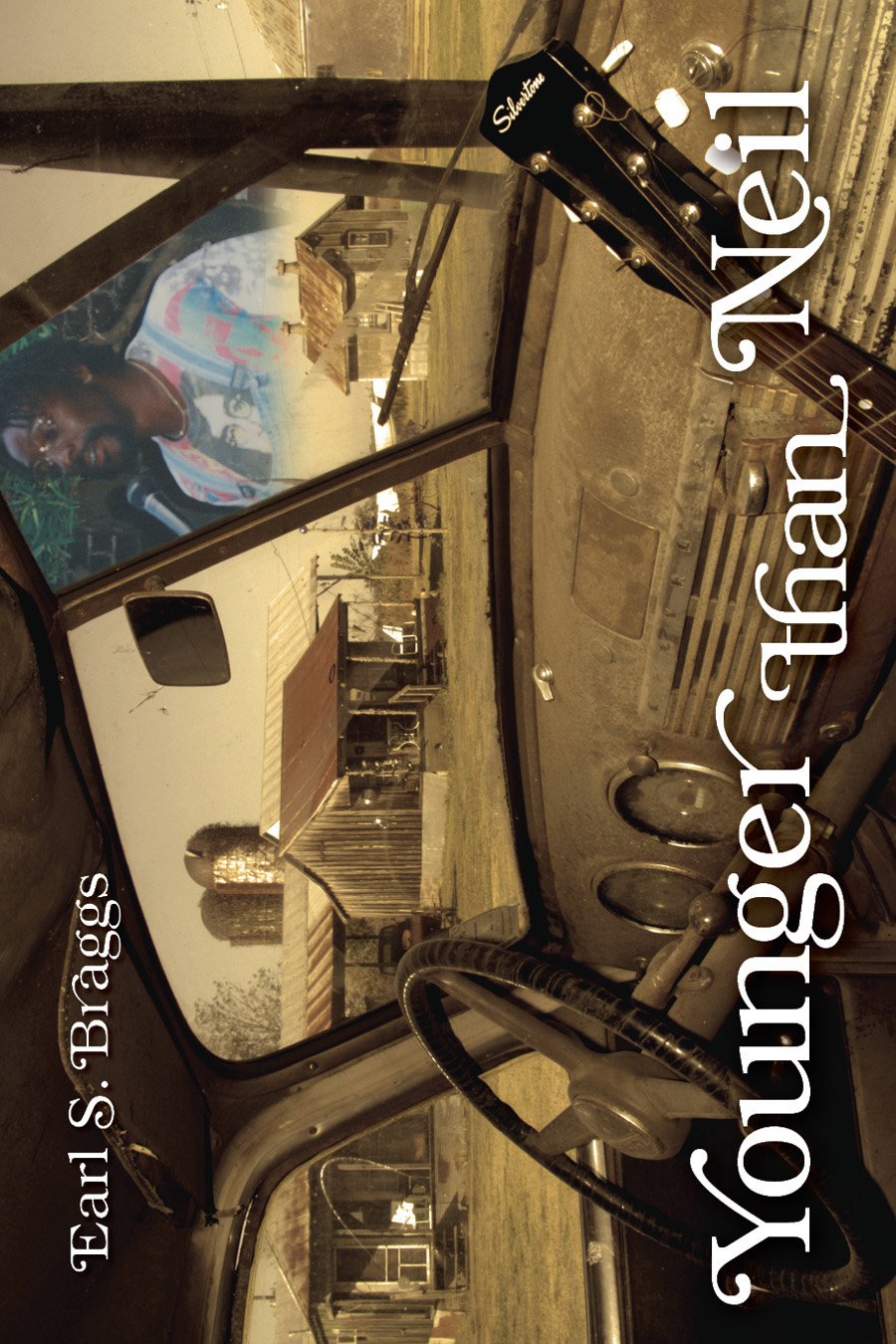
Nothing changes until it's changed in everyone's memories. Earl S. Braggs remembers and records his experience, protesting America's attempt to make him smaller than these large, vivid, Kerouacian, music-saturated poems. The reader is returned, through repetition's felicities -- the epic extension of the moment of composition -- inward to our national soul. -- Alice Notley
from A Long Glimpse Into the Surreal
Now suppose I showed to you a portrait
of Lee Miller without
showing her portrait to you. Would you question
the dialogue between love and life long enough
to believe in me
and Man Ray walking half drunk because
Man Ray does not drink because
Man Ray is dead as a blue pan.
Do you believe
in the unsilent color of the color red
blended out of context then blended slowly
into the slow motion movement of
slow cream three shades whiter than white
poured into the white
smoothness of her face? Lee Miller, her dress
black velvet crazy
juxtaposed, too lazy for a photographic pose
against the angle of her arm
just as white as white as ...
I am not.
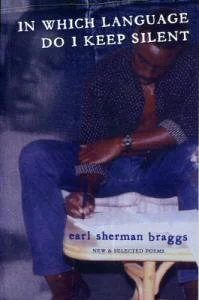
Earl S. Braggs' poems twist and wind through cities and streets, celebrating ordinary people and historical figures alike. He is generous enough to let them live in their own telling details, without bias. Like Whitman, he finds occasions for song everywhere. It is a rich, finely textured world full of surprises and insights. In Which Language Do I Keep Silent is a rich opportunity to experience this poet in all his powers. -- James Tate
Earl S. Braggs' Crossing Tecumseh Street is lively, vocal, and laced with an intelligent sense of humor. I enjoyed these poems. --Billy Collins
USA Today
(Cover Story)
Billings, Montana
The last real cowboy was buried in Boothill Cemetery
with his boots on, of course, in Billings, Montana.
On the west bank of the Yellowstone River is the seat
of Yellowstone County where the range riders
of Yellowstone still ride in the shadows of a life size
Yellowstone bronze cowboy and his mount. There's
a Yellowstone Art Museum and a Yellowstone Cowboy store,
a Yellowstone Avenue and a Yellowstone Road that leads
to a breathtaking view of Yellowstone Valley. Homesteading
days still fool the sun into believing in yellow light
even at night in Montana. Ponderosa Inn is where I stay
all lined up yellow in a yellow room following the sound
of yellow laughter. I am the narrator of narrow streets.
All stories are yellow here in Yellowstone Town. In spite of
Boothill, this is not a ghost city. It's pretty
ordinary. Street people talk to themselves. Pickup trucks park
where they want. Rush hour traffic is in a rush. Yellow buses
make you wait while they unload children. Street signs confuse
and lunch cafés are crowded
around yellow corner tables. Waiters and waitresses call customers
honey and sugar. All is sweet in Yellowtown
especially on yellow summer coffee mornings. By ritual
and design I read the USA Today at the Yellowstone Café,
Bar and Grill. It's Sunday morning and Johnny Peartree is looking
at me, telling me without saying the words: Indianville died
here in Yellowtown. Up and down these not so easy streets,
it seems, every car is talking to God on a cell phone. Which
God? Johnny Peartree's brows form a question. I question
the crossword puzzle but not the puzzle pieces missing. I know
the answer, I always have
worn my hair in a ponytail, always sat with my legs crossed
in the style of Sitting Bull, always been as crazy as Crazy Horde,
always walked in beauty easy as Kicking Bird, always
followed the sound of yellow laughter in this Yellowstone Town.
Johnny Peartree is me. Magic. See now and now you do not
the white buffalo caught yellow in high plateau dust, a photograph
of Montana on a blue sky day. Boothill, the saddles are empty now.
-- from Crossing Tecumseh Street
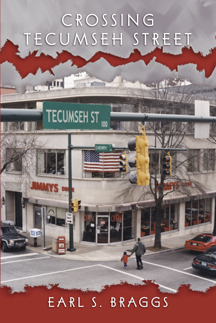
Earl S. Braggs' Crossing Tecumseh Street is lively, vocal, and laced with an intelligent sense of humor. I enjoyed these poems. I am going to share some of them with my poetry workshop which meets this afternoon. -- Billy Collins
"For the sake of a single poem, you must see many cities, many people and things," Rilke advises, and in Crossing Tecumseh Street, Earl Braggs does that and more as he takes us on his time machine of a book through several dozen cities and places where characters from history, literature, pop culture and fiction intersect like a maze of city streets to form a unique and visionary location. But he doesn't stop there, where most poets would be content, for this is an important book that explores the self, and the country that too often tries to suppress the self. Powered by an incantatory rhythm in the tradition of Whitman and a lyricism in the tradition of Toomer, Braggs uses the events of history as metaphors for the self's larger visions. Playing off complex interpenetrations of presence and absence, here and there, now and then, he discovers, finally, "you walk always in the wrong direction until / you are soaked // into realizing there is no need to disappear." Both historian and prophet, Braggs takes us across Tecumseh Street into a world of dazzling visions, enormous disappointments, and guarded hopes. I don't think there's another poet today who could give us all this. -- Richard Jackson
The City (A Thousand Taxis at Every Light, an All Night Movie)
New York City, New York
As upon arrival of a late flight, last night I drifted in
out of the fog. Yes, I am a standard stranger, wearing
a standard October shirt. Here, take my arm,
walk with me. It's midnight in midtown Manhattan.
On this corner of Broadway and West 65th, there's a man
on this side of the moon dressed in a skyline blue dress
inches shorter than his thirty year class reunion
high school prom night dirty white tuxedo jacket
two sizes too small for his crowded classroom rendition,
Street level Astronomy 101. This man sells exactly
what the sign says he sells, two dollar kaleidoscope looks
at a metrospective moon. Soon
is a not so orange neon OPEN ALL NIGHT light, blinking
Alice, Alice, Alice, Alice Underground Bar and Grill.
Now let me tell you, sadly. This is me and my gypsy passion
of separation. All of my life I practiced the science
of leaving.
I don't want to end here, so I'll begin here.
What you've heard is true. Up and down this and that
street, in dark theatres, lovers and non-lovers sit
watching this, an all night movie in this,
an all night town. Inside and outside, NYPD
is dizzy turning channels, rerunning primetime
TV real life cop drama. The picture show does not know.
NYPD pays little attention to me, the man, the movie
or the circle size moon. I know what Pink Floyd said
but there's no darkside to a taxi ride in this city tonight.
Meters keep running, you don't want to say "Keep the change,"
yet you do with one foot on the pavement. Get out,
walk fast, talk fast, stroller disturb the pace. Every
race is a green to red color change. Keep it. If
morning ever comes, we'll have breakfast with Capote
at Tiffany's.
The wind is level now and I, with sudden empty hands
feel the temperature dropping herself around my heart. Into
the fazed faces I focus. On this avenue, everyone
is famous as Andy Warhol painting Jacqueline Kennedy
as a measurement of style and fashion cratered
carelessly in full reflected round light beaming blue everything
about this man, his less than perfect fitting
dress, his less than evenly placed eyeliner, his more than
audible astrological repeating
"I'm not from here, never would be, I'm from Lunar City, Baltimore."
"I'm not from here, never would be, I'm from Lunar City, Baltimore."
From some other place, I, too, wish I could be
but my heart lets me know all too well, I'm
from nowhere, now. Listen, New York City the only city
in the world where you can buy an $8,000 Rolex watch
for 8 Dollars no tax. Listen
do you hear the mad music playing? Garage bands
are banging in basements and cellars. Sidewalks
crowded, overly so, are striking up struts to the steps
of foreign made subway shoes. Big Apple City blues
and rhythm that does not rhyme with anything
that does not ring cellular. "Everybody is talking to somebody,
I don't hear a word they're saying." The Village Voice
is a red newspaper box. George Washington is a bridge.
Hudson is my name. East is a river, and Manhattan
is a dead-Indian-transit-authority-transit-trail of years, a transit trail
of feather walking tears. What you've heard is true.
Downtown Beirut is a barbed wire bar at one-five-eight
1st Avenue. They say when you get caught in between
the moon and this new vertical velocity, the best
that you can do is fall in love. I have, but
there's a hole in my love and I have fallen through.
I try not to think of you as I stand, waiting
in line to pay for my kaleidoscope moon. Soon
is the insane argument of streets that do not care
that the walk-light says "Don't."
There she goes again, that girl walking sideways
like an Egyptian. Maybe it is her, maybe it is
Vivian Leigh or maybe it's
Elizabeth Taylor at seventeen, the Queen of the Nile.
Or maybe it's just me and my gypsy passion, separating
what I see from what I think I see
here in this place where every moment tells her own story
differently from the way it was told yesterday
and the day before yesterday.
In the whole of America, this is "The City" and
these moon dancing weirdos, Negroes, Jew Knows,
Kimonos, Gambinoes, ATMXOS and who knows and
you knows are the gods and goddesses and gothams
of this New Amsterdam still a Van Gogh Dutch yellow
taxi cab mistress,
but not for the Duke of York but mostly
for the Duke of Dow Jones and Nasdaq. Yes
because momentarily I am happy here among so many
lives poured into the moment, take my arm, walk
with me. Let me explain. Nothing in this town is typical
except "The City" attitude and that Frank Sinatra-Billy Joel
state of mind.
It's noisy, it's dirty, it's expensive, people are rude,
traffic is impossible. Cabs are everywhere all at once,
you can't get one unless you don't need one.
It's easier to find your way around than to know
where you are going.
This is the city of too many good restaurants, it's hurried,
it's dangerous, it's crazy, insane but you know what,
it's the most visited city in the world.
Where did Greta Garbo go when she wanted to be alone,
away from the holy and the good. What you've heard
is true. JFK ain't nothing but an airport Ellis
Island which, in fact, can still be reached via
Circle Line Ferry. Coney Island is still a hotdog
and a ferris wheel spinning out of purpose.
Saks Fifth Avenue is still on 5th Avenue and
the Empire State Building is still the tallest building
in the world, at least in spirit. I need a bottle
of cognac spirit. I'm caught in between. It's midnight
in Manhattan and the moon's full like a quarter
newly minted. This is just me returning
to that old delinquent thrill of us trying to find
what's lost.
There goes another Jean Harlow, another Batman and Robin
holding hands, another Marilyn easy as Norma Jean,
another James Dean subway poster taped to a wall
on Wall Street and yes on this very corner
of Broadway and 65th, this man is selling the moon.
Soon is a simple sign in Central Park "Jog
At Your Own Risk." Strawberry Fields is a forever rendition
for John, Paul, George, and Ringo.
Times Square is over there waiting for another year
to change her underwear in full view of the world.
The Met is meeting Weegee not for lunch in black and white
photography existing only in available black and white light tonight.
Madison Avenue crosses only three streets, J. Paul
Getty, J. P. Morgan, and John D. Rockefeller Blvd.
The Garment District is in China on a red vacation.
Labels are stamped "Not Made in the USA." Few
question the cotton content or the consent of children.
Over there, look, that's the Dakota Apartment House
One West 72nd Street.
Do not bother to knock. John Lennon is dead. Red
marks the spot.
The Flatiron Building is rounded at the corners.
Bloomingdale's is still open at this hour. I need
some Italian made American shoes. Real real estate
is Trump Plaza, New Jersey. Take a yellow cab.
"How can you sell the air," yells the sacred voice
of Chief Seattle. On this corner
this man is selling the moon. In my hand,
I have two dollars. Maybe tomorrow I'll catch a ballgame.
The Mets are playing the Atlanta Indians at Shea.
The Cleveland Braves are in town, looking to hear
that smack of a radio 9th inning game winning homerun. But
the grounds for burial have been covered up and the voice
can only be seen in what once was Yankee Stadium,
the house that Ruth built with a bat and some baggy baseball pants.
On the other side of the story, Yankee man, CEO and CFO,
George S. paid cash for the State of Cuba. That makes 51.
Castro doesn't give a damn. He's up in Harlem smoking a Havana
preaching at the Abyssinian Baptist
Church.
Adam Clayton Powell is turning over in that same ground
for burial. A site not to be seen. "Why" marks the grave.
Galileo is a Saturday night drag queen. The moon is full,
the constellations must be tired by now. It's enough
to make you want to dance around a rose bush. Garth Brooks
gave a free concert in the park, central to all but
it was HBO Pay-Per-View in Nashville, Tennessee. Look
at me with two dollars in my hand. Look at the moon,
look at the man. It's a slick trick of logic, a lapse,
a momentary lapse of realism, another brick in the wall.
Another Pink Floyd song.
"Teachers leave those kids alone. We don't need no education."
We live in New York City.
They say "If you can make it here" in this city where
it's easier to find your way around than to know where
you are going, "You can make it anywhere." I don't know
about that, I just know I don't want to end here
in this city that never sleeps, last night, from the view
of every hotel I've ever checked out of, 15 and ½
stories of vertical fiction above the level of taxi cab
lights,
I watched this city, this Statue of Liberty,
take down her crown and sleep stubborn as a child,
twisting and turning, waxing and waning full the scope
of this all night movie, this New York City Marathon moon.
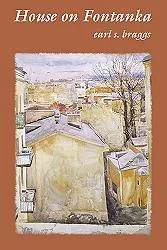
For a very long time l have not read such a passionate and gracefully written book of poetry as Earl S. Braggs' House on Fontanka. Being an African American, he so deeply understands the suffering of Russia, as Pushkin's grandson, inheriting Pushkin's great gift of global compassion. On the pages of this book you meet and talk with such great Russian poets as Akhmatova, Tsvetaeva, Pasternak, Mayakovsky, and Blok; you chat with lonely World War II veterans, play chess with park-bench Russian men, squeeze onto Russian buses and subways packed with red headed beauties.
The pages of this book are crowded by people whom he loves like lost and found brothers and sisters. The pages of this book are flooded by love. According to the poet's own definition, this book is a "Guided, but unguarded tour." Instead of pleasant tourism into attractions, Braggs blatantly chooses very painful tourism into destructions. But he finds so many rare flowers stubbornly growing in the ruins of so many hopes. Who else could accuse the author of "incomplete gratitude" as he accuses himself. It is only his privilege alone, but at the same time his noble mistake. His gratitude is not incomplete. There is no guilt here. -- Yevgeny Yevtushenko
The Story of Us
for Anastasia
And yet on these rare occasions
the magic secret of magic moments is sometimes revealed
by the way the sun rises the morning after
a night of winter rain. I did not
know it then. I was laughing, not quite enjoying
myself stranded yellow in a corner chair
in a room of too many conversations. Everything empty
until she arrived. Your mother
was wearing a winter red St. Petersburg overcoat.
I was wearing construction boots. I was rebuilding my life
I did not have enough parts to finish
the smallest of hovering small talk that seemed
to exclude and include the nothingness
until she strolled into the light. So unassumingly beautiful
no rain had fallen upon the shoulders of her coat.
The room divided into quad-quiet angles before resuming
its stagnant pose. The air was thick with promise
and though stars were not visible, I knew the dipper
had positioned itself directly above me for the evening.
Slowly as she moved around the room, my rhyme became
the rhythm of winter rain.
Her eyes found me, yet I could not leave
my yellow chair. My construction boots saw the parts
that had gone so many years missing, yet they, too,
refused to unlace in the face of promise. Like me
they, too, had been broken too many times to trust
winter rain love. That night I knew
there's no gold at the end of the rainbow. I knew
vanity has never been fair. And I knew
love at first sight is a tired, worn out, hungry phrase
but that night it felt right and it proved appropriate
the morning after our first winter rain.
So my dear Anastasiya, three years after the morning after
you took your first steps in Russia, your mother
still wears her St. Petersburg red overcoat and my boots
have long been discarded. I don't need them now.
I found the angles to build my room
in your mother's eyes that winter night of rain.
Remembering Matthews
For Bill, 1942-1997
When last I saw him, I didn't tell him
I was going to St. Petersburg. I didn't
tell him I'd fallen in love with Akhmatova
and I didn't tell him, I needed to see
my reflection in the icy black Baltic.
That evening at his New York City apartment
decorated with classical music, he played
an opera concert, I later learned,
he had planned to attend. At the end,
the night rolled over and I was drunk
on vodka and verse and voice. Yes,
he had a beautiful one. I can hear him now
stumbling through the perfume of visiting ladies.
When last I saw him, I didn't tell him
it was the Stray Dog Cabaret I hoped to find
among the smallest of midnight tables
and light blue circles of cigar smoke. I didn't
tell him about the tragic top coat Anna
so often wore or the azure shawl she so
carefully placed recklessly over her shoulders
and I didn't tell him about the fragileness
of her sacred refinement.
That evening in his New York City apartment
decorated with impressions of the Impressionist
movement, we moved out of sync and into
rhythm and blues and magic tragic carefree laughter.
In that city that never sleeps, we slept
wide awake in his voice. Yes,
he had a beautiful one. I can hear him now
ambling from pocket to pocket of his plaid jacket.
When last I saw him, I didn't tell him
I'd fallen in love with Akhmatova. I didn't
tell him I planned to visit the wild and simple country
she refused to leave and I didn't tell him
I planned to walk the left bank of the Neva,
then through the gates of Great Peter's Summer Garden.
That evening in his New York City apartment
decorated with myth recalling Roman and Greek promise.
The last silver summer before October 1917, I
didn't tell him.
That evening, he cooked Italian pasta poetry.
He recited each boiled spaghetti string line,
each diced perfect onion, each cubed bell, each
sad spin of garlic as if he knew
when I returned from Russia with or without love,
there would be no leftovers.
Sweeping Dirt
For the lady I saw
Perhaps she remembers, perhaps they all remember
when all of Russia was red dirt. Perhaps
I should close the window
to this third floor room, but I won't, not yet,
it's too hot in Kaliningrad this morning. So I look
out into the breeze, onto the intersection where
all things come together, where four dirt streets meet,
where the lady has been sweeping and sweeping until
they appear almost paved.
The lady, she wears black tall rubber boots and a skirt
that flares so that the tops are invisible. Her head
is covered by a rag tied unproud around
what is necessary. She is in no hurry.
Cars, they come, stop and go as if to give moments
of dirt contemplation. Diligently the sweeper sweeps
small piles of morning from center to sides.
The dogs, they come, stop and go as if to investigate
without looking up at me sitting here holding a fork
and a knife and a voice of my own appointment, eating
caviar for breakfast from a plastic plate. Drinking vodka for milk.
I should be happy and I am
so far away from home until small things
like sweeping dirt simply amaze me. Perhaps
it reminds me of my childhood, a little boy growing up
in North Carolina living in dirt. Dirt front yard, dirt
back porch, dirt always on the kitchen floor.
Oh how we paid for the dirt that gave permission to live
and oh how happy we lived in that dirt. Sometimes
I can still hear my grandmama saying, Boy, go out there
and sweep the dirt.
As a child I hated yard brooms and hound dogs
we seemed always to have that just laid there in the yard
at the edge and just watched dirt rise and fall
stubborn and determined as any dirt this morning in this city.
I look down, three stories above dirt. I've finished my milk.
It's getting late. Tiny black specks left on a white plastic plate.
Perhaps I should button up my shirt, go down to the street
and tell that lady that I remember all
too well what I wish I would forget.
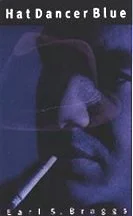
Robert Dana-Anhinga Prize for Poetry (1992)
Hat Dancer Blue isn't a conventional title for a book of poetry, and neither are the poems. The writing is musical and rough, not by turns but constantly both. They breathe subject matter born of realism and an ear for stories. Here's a strong, young, black voice that applies imagination to social detail and can speak for and through others. When the external world of poetry is as richly textured and as urgent as it is for this writer, form comes from the outside in. These poems blossom out of context. Strong stuff that matters. Not the usual thing. -- Marvin Bell
One in One Thousand Paper People
The dirty brown bag man stands on the same corner
every morning greeting the black coffee crowd
rushing to meet the workday morning madness at the office.
He doesn't remember his real name so he doesn't answer
to any name that doesn't clink the bottom of the tin can
he carries around like an old lady's purse.
The light changes and I walk even though the sign says don't
walk past this man without feeling his pain enough to flip
a quarter to the can which he catches with his hard hand.
In a conversation that we never had he tells me
he was a dirt soldier in a war that never was declared,
a war where the enemy and the ally were the same man.
"That kind of shit makes you a little crazy," his eyes say.
Today is too cold to think so he drinks anything he can find
while he leans his fragile life against "The Wall" that forgot
to carve his name in so now he is sitting there loaded
like the M-16 he barely remembers carrying
into the jungle never knowing who the enemy is so he shoots
everybody within shouting distance
with his pool water-blue bullet-sharp eyes
that dart back and forth like a target too quick to hit
dead center. Time after time I walk past this man
wearing my Wall Street gray flannel suit wondering
if anyone in this crowd remembers Kent State or Huey P.
Newton's law of this never never never land of lies.
I really don't know what good I can do for a quarter tossed
to a begging man who only asks the world
for a cup of black morning coffee, sugar forgone.
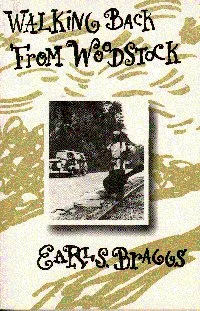
Earl S. Braggs' Walking Back from Woodstock links the psychodramatic public [that] America put itself through in the 1960s to our privacies, our childhoods, our love lives, the music we hummed as we muddled through. His book is jaunty, heartbroken, fast-talking, and true. -- William Matthews
The Things They Carried
(Crisco Martinez' 1950-1967)
for Tim O'Brien
Crisco died with his soldier in his hand.
That's right, he was taking a piss
and Charlie picked him out long distance.
The morning was one of those mornings
when everyone felt safe,
as safe as we could feel in the bush.
It was a scene perhaps from a war movie.
A platoon of eighteen boys in loose rank
walking towards daybreak.
The report we got said "The area ain't hot."
So we relaxed and walked slow
and talked low about girls back home.
Crisco's girl was Susan, a buxom blond
he said he met somewhere in California.
Said she was prettier than the picture
he carried like a god in his shirt pocket.
Said they were going to be married
when his tour was over.
It was a good day to be outside.
There was a breeze.
We were stepping from the shade
into bright sunlight.
We'd just smoked a joint
shoe-laced with heroin.
We were floating on seasick waves
and the horse was starting to kick.
We weren't paying attention.
The birds were singing.
The air smelled fresh.
The sky was chamber music and was clear.
It wasn't a morning for war movies.
We were walking in loose rank and laughing
and talking about girls back home.
We were drifting.
It wasn't hot.
There was a breeze.
The banyan trees were movie props
of slow dancing leaves.
The joint was good.
The horse was kicking.
We weren't paying attention.
We were joking and talking about girls.
Crisco was going to be married.
The sky was chamber music and was clear.
The birds were singing.
It wasn't hot.
There was a breeze.
It was a good day for a white wedding
and all the best men were standing right there.